The Evolution of OEM Casting Technologies in the 21st Century
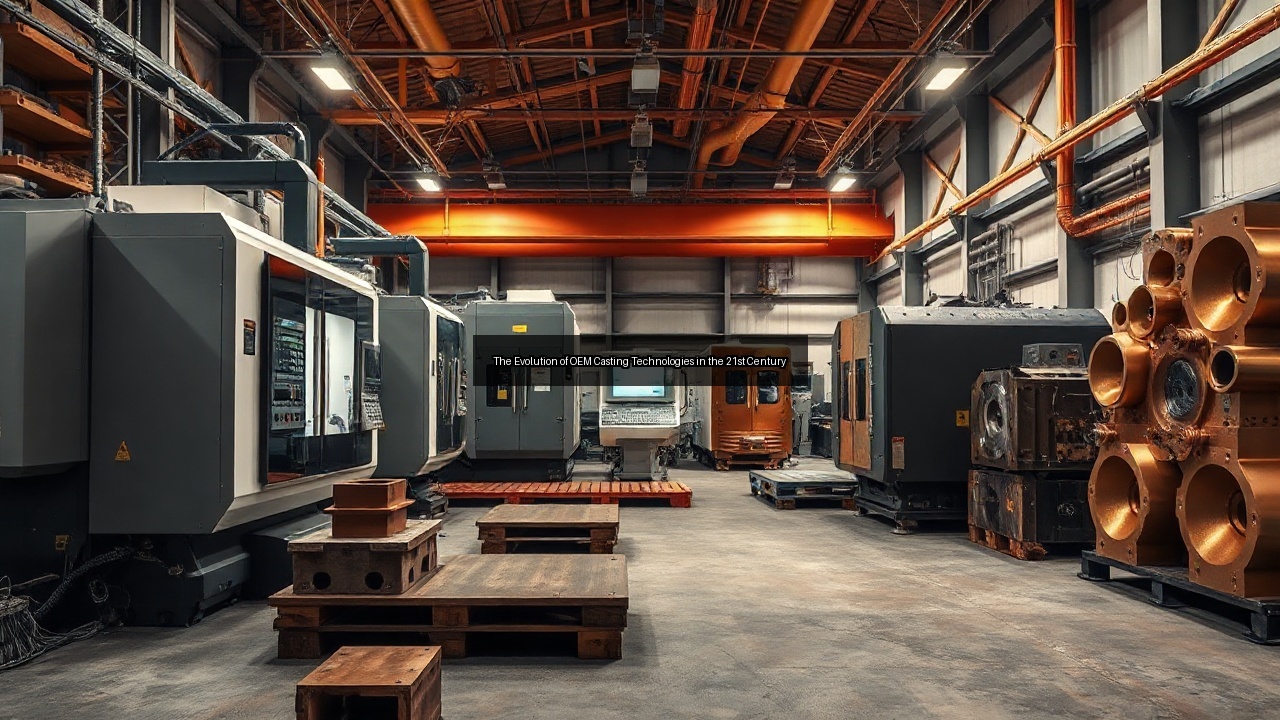
Overview of OEM Casting Technologies
Understanding OEM Casting
OEM casting refers to the process of producing components for original equipment manufacturers (OEMs) using various casting techniques. This method allows manufacturers to create complex shapes and designs that are integral to the final product. OEM casting plays a pivotal role across numerous industries, including automotive, aerospace, and consumer goods. By leveraging casting technologies, OEMs can ensure consistent quality and precision in their components, meeting the demanding specifications required for modern applications. The evolution of OEM casting technologies has been driven by advancements in materials, processes, and machinery, allowing for enhanced performance and efficiency in production.
Importance of Casting in Manufacturing
Casting serves as a foundational technique in metal casting for OEMs manufacturing, enabling the creation of intricate parts that would be challenging to achieve through other methods. It stands out for its ability to produce large quantities of items with uniform quality and minimal waste. In many cases, casting reduces the need for extensive machining, making it a cost-effective choice for OEMs. The versatility of casting allows manufacturers to use various metals, including aluminum, iron, and specialized alloys, to meet diverse performance requirements. As manufacturers strive for innovation, casting remains a preferred method for producing components that meet rigorous standards in strength, durability, and precision.
Key Materials Used in OEM Casting
The choice of materials in OEM casting significantly influences the performance and application of the final products. Traditional materials like cast iron and ductile iron are popular due to their excellent mechanical properties and ability to withstand high stress. Cast iron, known for its good fluidity and wear resistance, finds applications in engine blocks and heavy machinery. Ductile iron, with its enhanced ductility and toughness, is often used in automotive parts and industrial equipment. Aluminum has gained popularity in OEM castings due to its lightweight nature and corrosion resistance, making it ideal for applications requiring reduced weight without compromising strength. Other materials, such as magnesium and various alloys, are also increasingly utilized to meet specific performance criteria.
Advancements in Casting Processes
Investment Casting: Precision and Versatility
Investment casting, also known as lost-wax casting, has emerged as a leading technology in OEM casting due to its exceptional precision and versatility. This process involves creating a wax pattern that is coated with a ceramic shell. Once the shell hardens, the wax is melted away, leaving a mold ready for metal pouring. The investment casting method allows for intricate designs and tight tolerances, making it ideal for complex components found in industries like aerospace and medical devices. Its ability to produce high-quality castings with minimal machining requirements makes it a favored choice among OEM manufacturers. Furthermore, investment casting accommodates a wide range of metals, including aluminum, stainless steel, and titanium, broadening its applicability across various sectors.
Die Casting: Efficiency in Production
Die casting has transformed the manufacturing landscape with its unmatched efficiency and speed. This process involves forcing molten metal into a mold cavity under high pressure, resulting in precise and uniform castings. Die casting is particularly advantageous for large production runs, where maintaining dimensional accuracy is crucial. OEM manufacturers often rely on die castings for components in automotive, electronics, and consumer products due to their lightweight properties and intricate shapes. The use of aluminum in die casting further enhances the appeal, offering excellent strength-to-weight ratios. As technology advances, improvements in die casting machinery and techniques continue to optimize production efficiency while reducing costs and waste.
Sand Casting: Traditional Techniques and Modern Applications
Sand casting remains a staple in the casting industry, combining traditional techniques with modern innovations. This process involves creating a mold from sand, which is then filled with molten metal to form the desired part. Sand casting is particularly valued for its adaptability and cost-effectiveness, making it suitable for both small and large production runs. OEM manufacturers utilize sand casting for various applications, from automotive parts to large industrial components. Recent advancements in sand casting technology, including the introduction of 3D printing for mold creation, have increased production speed and accuracy. This blend of tradition and modernization solidifies sand casting's position as a vital method in OEM casting technologies.
Material Innovations in OEM Casting
Ductile Iron vs. Cast Iron: Properties and Applications
Ductile iron and cast iron represent two fundamental materials in the OEM casting domain, each with distinct properties and applications. Cast iron, characterized by its graphite content, offers excellent wear resistance and machinability, making it suitable for components like engine blocks and pipes. Ductile iron, on the other hand, features a unique microstructure that imparts greater strength and ductility, ideal for parts subjected to high stress and fatigue. Industries such as automotive and heavy machinery frequently employ ductile iron for its superior mechanical properties. Understanding the differences between these materials enables OEM manufacturers to select the appropriate type for specific applications, optimizing performance and longevity in their products.
Utilizing Aluminum in OEM Castings
Aluminum has become a cornerstone in OEM castings due to its lightweight, corrosion-resistant properties and excellent strength-to-weight ratio. This metal serves as a prime choice for automotive and aerospace applications, where reducing weight without sacrificing performance is critical. The versatility of aluminum allows for various casting processes, including die casting and sand casting, each tailored to produce specific component characteristics. Additionally, aluminum's recyclability contributes to sustainability efforts, making it an environmentally friendly option for OEM manufacturers. As advancements in aluminum alloys continue to emerge, the material's role in OEM casting will likely expand, meeting the demands of increasingly complex designs and applications.
The Role of Machining in Enhancing Castings
Machining plays a vital role in the OEM casting process, enhancing the quality and precision of final products. After the casting process, components often require machining to achieve the desired tolerances and surface finishes. This step is crucial for parts that must fit precisely within assemblies. CNC machining technology has revolutionized this aspect, allowing for high-speed and accurate machining of castings. OEM manufacturers leverage CNC machining to streamline production, reduce lead times, and improve overall efficiency. The integration of machining with casting processes ensures that manufacturers can meet stringent quality standards while providing flexibility in design and production.
Future Trends in OEM Casting
Emerging Technologies in Metal Casting
The future of OEM casting lies in the adoption of emerging technologies that promise to revolutionize the industry. Innovations such as 3D printing are beginning to reshape traditional casting methods, offering rapid prototyping and customization capabilities. Metal additive manufacturing allows for the creation of complex geometries that conventional casting cannot achieve. Additionally, advancements in simulation software enable manufacturers to optimize casting designs before production, reducing waste and improving efficiency. As these technologies mature, OEM manufacturers will likely experience increased flexibility and competitiveness in the evolving landscape of metal casting.
The Impact of CNC Machining on Production
CNC machining continues to have a profound impact on the production of OEM castings. This technology enhances precision and consistency in machining operations, allowing manufacturers to produce complex parts with tight tolerances. The integration of CNC machining with casting processes streamlines production workflows, reducing the need for manual intervention and minimizing the potential for errors. As manufacturers seek to improve efficiency, the combination of CNC machining and casting processes will become increasingly common, driving innovations and enhancing product quality across various industries.
Sustainability Practices in Foundries
Sustainability has emerged as a critical focus for OEM manufacturers, particularly in the foundry sector. Practices such as recycling metals, reducing energy consumption, and minimizing waste are becoming standard in modern foundries. Many manufacturers are exploring eco-friendly materials and processes to align with global sustainability goals. Innovations in energy-efficient melting methods and the use of alternative, less harmful materials are shaping the future of OEM casting. Embracing sustainability not only benefits the environment but also enhances brand reputation and meets consumer demand for responsible manufacturing practices.
See Also
- Unlocking the Future of Manufacturing with OEM Casting Techniques
- Navigating the Complexities of OEM Metal Casting Processes for Optimal Results
- Unlocking the Secrets of OEM Casting for High-Quality Metal Components
- Why OEM Casting is Essential for Modern Manufacturing Success
- Transforming Designs into Reality with OEM Casting Capabilities