Exploring the Benefits of Thread Rolling in Aerospace Applications
Understanding Thread Rolling in Aerospace Manufacturing
What is Thread Rolling?
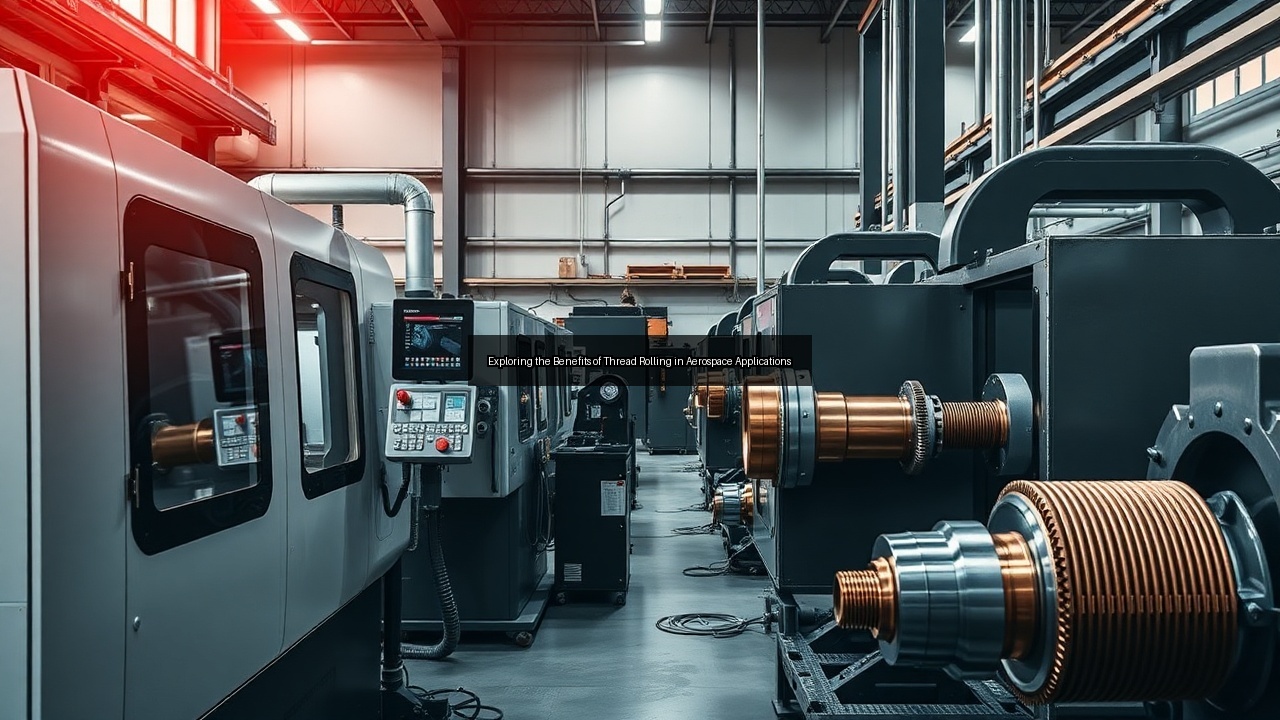
Thread rolling is a cold forming process that creates threads on metal components through the use of cylindrical dies. This technique applies pressure to the workpiece, causing it to deform and form precise threads without removing material. The process is particularly advantageous in the aerospace industry, where the integrity and performance of fasteners are critical. Thread rolling services enhance the strength and durability of components, catering to the rigorous demands of aerospace applications. By employing this method, manufacturers can achieve superior thread quality and consistency, critical for maintaining the safety and reliability of aircraft and space vehicles.
Differences Between Thread Rolling and Traditional Threading
Thread rolling differs significantly from traditional threading methods, such as cutting or milling. Traditional threading often involves removing material from a workpiece, which can lead to stress concentrations and reduced material integrity. In contrast, thread rolling preserves the material's grain structure, enhancing the overall strength of the finished threads. Additionally, thread rolling produces threads that exhibit superior surface finishes, reducing the risk of corrosion and wear. This method is especially well-suited for aerospace applications, where the performance of fasteners must withstand extreme conditions. Manufacturers opting for thread rolling services benefit from reduced production times and minimized waste, making it an efficient choice in high-demand environments.
Key Materials Used in Thread Rolling
Various metals are suitable for thread rolling, including steel, aluminum, titanium, and stainless steel. Each material offers distinct advantages for aerospace applications. For instance, titanium provides exceptional strength-to-weight ratios, making it a preferred choice in aircraft manufacturing. Aluminum, on the other hand, offers lightweight properties without compromising structural integrity. The selection of materials for thread rolling depends on the specific requirements of the application, including load-bearing capacities and environmental conditions. Manufacturers often use advanced CNC machining techniques to ensure precise dimensions and tolerances in the rolling process, further enhancing the quality of the final product.
Advantages of Thread Rolling for Aerospace Applications
Increased Strength and Durability of Fasteners
One of the primary benefits of thread rolling in aerospace applications is the increased strength and durability of fasteners. The cold working process involved in thread rolling enhances the material's mechanical properties, resulting in threads that can withstand higher loads and resist fatigue. This is crucial in aerospace engineering, where fasteners are subject to dynamic forces during flight. Traditional threading methods, which remove material, often lead to weakened threads prone to failure. Thread rolled fasteners exhibit improved resistance to stress and strain, ensuring they maintain their integrity under extreme conditions. This reliability not only enhances safety but also reduces maintenance costs over the lifespan of aerospace components.
Enhanced Precision in Threading
Thread rolling services provide enhanced precision in threading, a critical factor in aerospace manufacturing. The rolling process produces threads with high dimensional accuracy, essential for ensuring proper fit and function in assembled components. This precision is vital when dealing with tight tolerances and complex assemblies commonly found in aircraft and spacecraft. CNC machining technologies further augment this capability by enabling manufacturers to achieve exact specifications consistently. As a result, thread rolling minimizes the likelihood of defects and rework, streamlining production processes. The ability to produce high-quality threads efficiently positions thread rolling as a preferred method in the competitive aerospace industry.
Cost-Effectiveness in Production
Cost-effectiveness serves as another significant advantage of thread rolling for aerospace applications. The efficiency of the thread rolling process reduces material waste and shortens production times, leading to lower overall manufacturing costs. Unlike traditional methods that may require extensive post-processing or finishing, thread rolling often produces ready-to-use threads that require minimal additional work. Manufacturers can achieve higher output rates with fewer resources, ultimately enhancing profitability. Moreover, the durability and strength of thread rolled components often translate to longer service life, reducing replacement costs and enhancing the value proposition for aerospace manufacturers. This combination of efficiency and quality makes thread rolling an attractive option in the aerospace sector.
Technological Innovations in Thread Rolling Services
CNC Machining and Its Role in Thread Rolling
CNC machining plays a vital role in the evolution of thread rolling services. The integration of computer numerical control technology allows for precise control over the rolling process, resulting in highly accurate and consistent threads. CNC machines can program complex patterns and specifications, accommodating various materials and thread profiles. This innovation enhances the efficiency of production runs, enabling manufacturers to produce large quantities of custom fasteners quickly. Furthermore, CNC machining minimizes human error, ensuring reliability in the manufacturing process. As the aerospace industry continues to demand higher precision and quality, the role of CNC in thread rolling will only grow, solidifying its place as a cornerstone of modern aerospace manufacturing.
The Impact of EDM Machining on Thread Quality
Electrical Discharge Machining (EDM) has revolutionized the thread rolling process by improving thread quality and surface finish. EDM machining complements thread rolling by allowing for the creation of intricate thread profiles that may be challenging to achieve through traditional methods. This technology uses electrical discharges to remove material, resulting in clean and precise cuts. The synergy between EDM and thread rolling enhances the overall performance of fasteners, providing smooth surfaces that reduce friction and wear. In aerospace applications, where high performance is non-negotiable, the combination of EDM machining and thread rolling ensures the production of superior quality fasteners capable of meeting the industry's stringent standards.
Advancements in Swiss Screw Machining for Aerospace Components
Swiss screw machining has gained traction in the aerospace sector due to its ability to produce highly intricate components with exceptional precision. This method allows for the simultaneous machining of multiple features, reducing cycle times and increasing productivity. In conjunction with thread rolling services, Swiss screw machining enables manufacturers to create complex fasteners and other components that meet the demanding requirements of aerospace applications. The combination of these technologies not only enhances efficiency but also improves the quality of the final products. As manufacturers continue to innovate and adopt advanced techniques, the synergy between thread rolling and Swiss screw machining will likely drive further advancements in aerospace manufacturing.
Applications and Case Studies in Aerospace and Beyond
Military Applications of Thread Rolling
Thread rolling finds significant applications within the military sector, where the need for reliable and durable fasteners is paramount. Military aerospace components must withstand harsh environments and extreme conditions, making the strength of fasteners critical. Thread rolled fasteners, known for their enhanced durability and precision, are extensively used in aircraft, missiles, and other military hardware. Manufacturers supplying the military benefit from thread rolling services that ensure compliance with stringent specifications and standards. Case studies demonstrate that adopting thread rolling leads to reduced failure rates and improved performance in military applications, reinforcing the importance of this technology in defense and aerospace sectors.
Oil and Gas Industry Utilization
The oil and gas industry also leverages thread rolling for various applications, particularly in drilling and extraction equipment. Fasteners used in this sector must endure extreme pressures and corrosive environments, making the strength and integrity of these components vital. Thread rolling services provide the necessary durability and precision for fasteners that operate in challenging conditions. The enhanced surface finish achieved through thread rolling reduces the risk of corrosion, extending the lifespan of components in the field. As the demand for energy continues to grow, the oil and gas sector increasingly relies on advanced manufacturing techniques like thread rolling to meet its operational requirements.
Success Stories from Wisconsin Manufacturers
Wisconsin manufacturers have embraced thread rolling services to enhance their production capabilities and deliver high-quality components. Several success stories highlight the positive impact of this technology on local businesses. By integrating thread rolling into their operations, manufacturers have reported significant improvements in product quality and production efficiency. The ability to produce durable, precise fasteners has positioned these companies as leaders in the aerospace and defense industries. Furthermore, the collaboration between local manufacturers and technology providers has fostered innovation and growth within the region, showcasing the potential of thread rolling services to drive success in competitive markets.
See Also
- From Design to Production The Journey of Thread Rolling
- How Thread Rolling Services Revolutionize Metal Fabrication in Wisconsin
- The Importance of Quality Control in Thread Rolling Services
- The Future of Manufacturing Enhanced by Thread Rolling Techniques
- Thread Rolling Services A Key Component in CNC Milling